Are Squirrels Dangerous in Your Home?
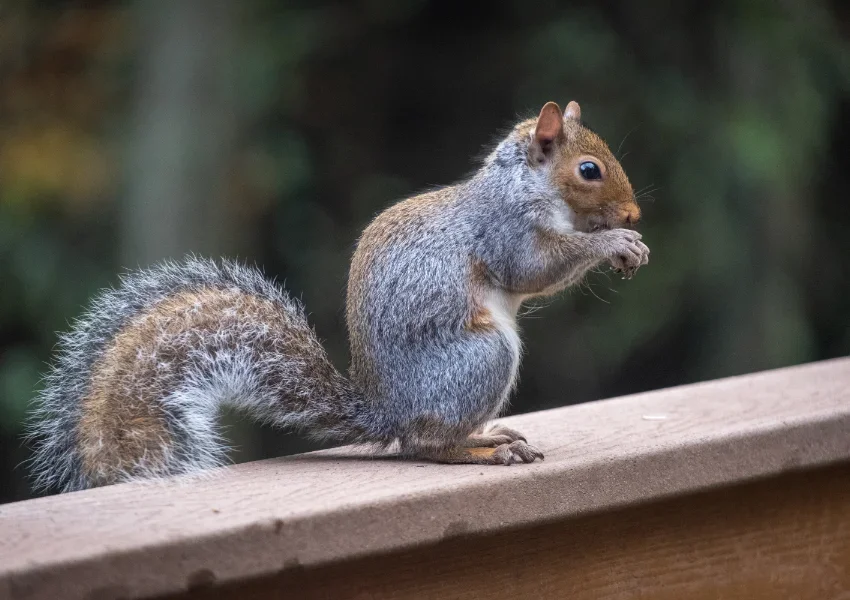
Squirrel sitting on a wood railing.
These energetic little creatures have become such a familiar sight in our Triangle neighborhoods that we often view them as harmless entertainment. From the dangers of shredded insulation to gnawed electrical wiring, the evidence is clear: squirrels don't belong inside your house.
North Carolina provides an almost perfect habitat for gray squirrels (the species most commonly found invading local homes). With our abundant oak and hickory trees, moderate climate, and mix of older neighborhoods and newer developments, we've essentially created squirrel paradise.
Risks of Squirrels in Your Home
Disease Transmission
Squirrels can carry and transmit several diseases that should concern every homeowner. Salmonella and leptospirosis are among the most common pathogens associated with squirrel infestations. Both can cause serious illness in humans, with symptoms ranging from severe gastrointestinal distress to kidney damage and other systemic problems.
The transmission usually doesn't happen through direct contact with the squirrel itself. Instead, the danger comes from exposure to their droppings and urine, which accumulate rapidly in infested attics and wall spaces.
When squirrels establish a nest in your home, they create a latrine area (and they use it constantly). Over time, this biological waste contaminates insulation, wooden structures, and even the air you breathe. Dried squirrel feces can become airborne as tiny particles, entering your home's ventilation system and circulating throughout your living spaces.
For family members with respiratory conditions, allergies, or weakened immune systems, this contamination poses especially serious risks. Children and elderly household members are particularly vulnerable.
Parasites
Perhaps even more concerning than the diseases squirrels carry directly are the parasites they bring with them. Fleas and ticks live on squirrels and thrive in the nest materials these animals create in your attic. Once established, these parasites seek out new hosts: including your family and pets.
Flea bites can transmit serious diseases including tularemia and (in rare cases) plague. Yes, plague still exists, and cases have been linked to squirrel exposure as recently as 2017 in Colorado.
Ticks present another serious threat. Durham County residents are already aware of the Lyme disease risk in our area, but many don't realize that squirrels serve as transportation for ticks into their homes. A single squirrel family nesting in your attic can introduce dozens of ticks to your property, exponentially increasing your family's exposure risk.
How Squirrels Damage Your Home
Their gnawing never stops.
Squirrels’ teeth never stop growing, so they must constantly gnaw on hard materials to keep their teeth worn down to a manageable length. This drives them to chew on everything in sight. And when they're living in your home, that means your property becomes their personal chew toy. Wood, plastic, aluminum, and even soft metals are no match for squirrel teeth.
They will:
Gnaw through fascia boards, window frames, door jambs, and roof decking.
Enlarge small holes into gaping entry points.
Chew through PVC pipes and ductwork.
Squirrels will also destroy your insulation.
Your attic insulation is one of the most expensive and important components of your home's energy efficiency. To a squirrel, it looks like the perfect nesting material. These animals will tunnel through insulation, tear it apart, compact it, and soil it with urine and feces.
The result is significantly reduced insulation effectiveness, leading to higher heating and cooling bills. In North Carolina's hot summers and chilly winters, that compromised insulation means your HVAC system works harder and your energy costs climb.
Beyond that, contaminated insulation often requires complete removal and replacement. This isn't a simple DIY project, it requires professional equipment, proper disposal of biohazardous materials, and installation of new insulation.
Many homeowners dealing with squirrel infestations report noticing their utility bills increasing before they even realize they have an animal problem. The costs add up quickly, often reaching several thousand dollars for a badly contaminated attic.
Electrical Damage
Squirrels don't discriminate in their gnawing, electrical wiring looks just as appealing to them as wood or insulation. They'll chew through wire insulation, exposing the conductive metal underneath.
Sometimes they chew completely through wires, causing immediate power failures to circuits or appliances. Other times, they leave wires partially damaged but still functional. It’s a scenario that's actually more dangerous.
Exposed wires can touch each other or metal surfaces, causing short circuits. Frayed insulation can allow wires to overheat. Both situations create significant fire hazards. Your homeowner's insurance might cover fire damage, but it won't replace family photographs, irreplaceable heirlooms, or (most importantly) protect the lives of your loved ones.
Regular inspection of accessible wiring, particularly in attic spaces, becomes essential for any home that has experienced or is at risk for squirrel intrusion.
Why Squirrels Target Your Home
Squirrels are driven by two primary needs: food and shelter. Your home offers both in abundance. Those bird feeders in your backyard become an easy buffet. The warm, dry space in your attic becomes the perfect nursery for raising baby squirrels. And unlike their forest homes, your house provides protection from predators like hawks and neighborhood cats.
Properties with mature trees (especially those with branches hanging over or touching the roof) create natural highways for squirrels to access your home. Also, older homes often have small gaps, deteriorating wood, or aging vents that provide easy entry points.
Squirrels breed twice a year in our region, once in late winter and again in summer. During these periods, pregnant females become especially motivated to find safe, warm spaces to raise their young. Your attic, with its insulation and protection from the elements, looks like a five-star hotel compared to a drafty tree hollow.
Signs of Squirrels in Your Home
Sound is often the first indicator. If you hear scurrying, scratching, or thumping sounds coming from your attic or walls during these times, squirrels are likely the cause.
Chew marks may also be present around rooflines, soffits, vents, and utility entry points.
Damaged or missing vent covers are also a major sign.
Droppings look like small dark pellets, similar to (but larger than) mouse droppings.
A musty or unpleasant odor may come around, particularly near attic access points.
Stains on ceilings can indicate urine accumulation above.
Unusual electrical behavior (flickering lights, non-functioning outlets, or tripped breakers) might suggest wiring damage.
How to Protect Your North Carolina Home
The best solution to squirrel problems is preventing them from occurring in the first place. While complete prevention isn't always possible, taking proactive steps significantly reduces your risk:
Tree management is essential.
Trim branches that overhang your roof or come within six to eight feet of your home. This removes the easiest access routes squirrels use to reach your roof. While this might seem like a lot of clearance, squirrels are remarkable jumpers and can easily bridge shorter distances.
Inspect your home's exterior regularly, paying particular attention to the roofline.
Look for gaps, holes, deteriorating wood, and damaged vents. Address any openings promptly since squirrels can fit through surprisingly small spaces. Use heavy-gauge hardware cloth to cover vents and other openings where airflow must be maintained.
Eliminate food sources that attract squirrels to your property.
Consider removing bird feeders, or use squirrel-proof designs. Keep fallen fruit and nuts cleaned up and make sure trash containers have secure lids. The less attractive your property is as a food source, the less interested squirrels will be in making it their home.
Despite your best prevention efforts, squirrels sometimes find their way inside. When they do, professional wildlife control becomes essential. This isn't a problem most homeowners should tackle on their own.
Let Wildman Wildlife Removal & Exclusion Handle Your Squirrel Problem
From the health risks of disease and parasites to the structural dangers of gnawed wiring and damaged building components, squirrel infestations require serious attention.
Your home is likely your most valuable investment. Your family's health and safety are priceless. Taking action against squirrel infestations protects both. The wildlife specialists at Wildman Wildlife Removal & Exclusion will conduct a thorough inspection, remove squirrels humanely, and seal entry points.
Contact Wildman WIldlife Removal & Exclusion today to get started with a service quote!